Does Water Damage Cause Mold? What You Need to Know!
A particularly persistent problem in damp, humid, or rainy regions, mold can emerge from seemingly nowhere. However, any mold you find in your home or business has likely been growing for quite some time—just out of sight.
But what about homes and businesses in arid, dry, or desert locations that have experienced water damage? Can water damage cause mold?
The short answer is yes. Read on to learn how water damage leads to mold, what signs to look for, and when to call in the pros.
How Water Damage Can Quickly Lead to Mold Growth
Tiny, invisible mold spores naturally exist everywhere. When they encounter wet surfaces, they start growing. That’s why water intrusion provides a perfect environment for mold and often requires professional water damage restoration to fully dry and stabilize affected materials.
If the wet surface is an organic material (e.g., wood) or a porous material (e.g., drywall), mold growth can become especially quick and pervasive.
Generally speaking, mold spores begin growing within 24 to 48 hours. That window of time is recognized and referenced by industry guidance as a key benchmark for mold detection and response.
Types of Water Damage That Commonly Cause Mold
Three types of water damage can create optimal conditions for mold:
- Clean water – Generally referring to tap water or rainwater, sources include plumbing failures, appliance leaks, and minor roof leaks. This is also referred to as Category 1 water.
- Grey water – This consists of water used for basic cleaning or nonpotable purposes, such as from sump pump failures, washing machine drainage, or contaminated moisture sources. This type of water damage is categorized as Category 2.
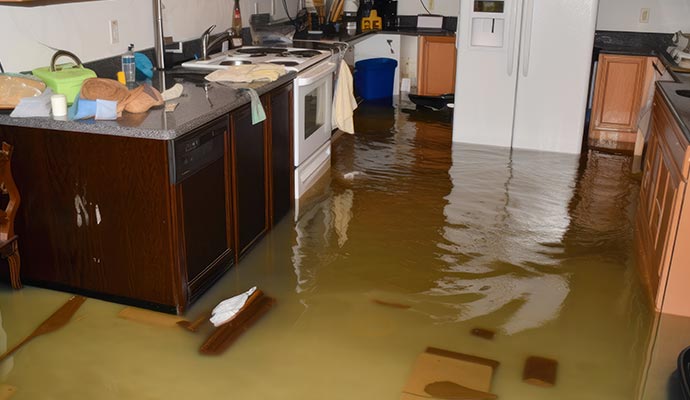
Black water – Also known as ‘Category 3’ water, black water is contaminated with human or animal waste and could be harmful or toxic. Presenting the greatest risk of rapid-spreading mold, sources include sewage backups and floodwater. Even though rain rainwater starts as Category 1 it quickly becomes Category 3 once it hits the ground or enters a building, picking up contaminants like debris, sewage, chemicals, and bacteria.
Hidden Moisture That Homeowners Often Miss
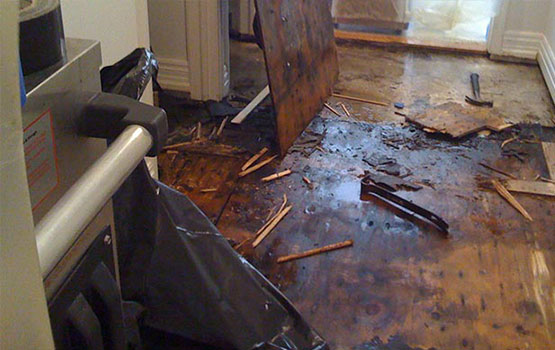
Perhaps the most frustrating problem with mold is how difficult it is to detect early growth or the moisture that causes it—at least with the human eye. Moisture can become trapped behind drywall, within insulation, under flooring, or inside wall cavities, allowing for unmonitored spreading.
Mold-enabling moisture can also come from humidity, condensation, or poor ventilation, regardless of whether visible water remains or not.
Early Signs of Mold After Water Damage
After water damage, it’s crucial to monitor for early signs of mold, including:
- Musty odors lingering in affected rooms, especially enclosed spaces
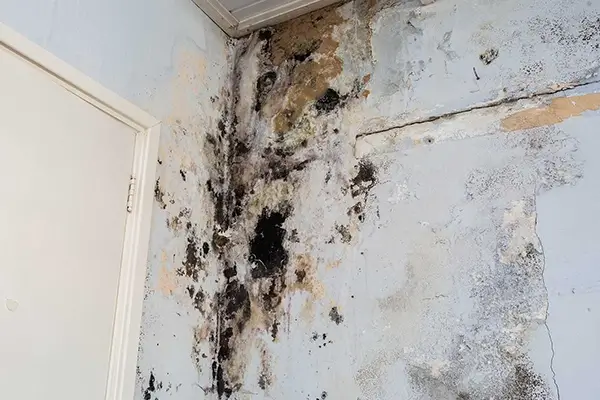
- Discoloration, spotting, or water stains emerging from behind walls, ceilings, or trim
- Peeling paint, warping wood (e.g., floors, door jambs), or soft, spongy drywall
- Allergies, coughing, or respiratory irritation persisting or worsening
- Increased indoor humidity or condensation (e.g., on windows or on bathroom surfaces)
When Mold Becomes a Serious Problem
So, water issues and damage can cause interior mold growth. But if the same mold keeps coming back regularly, a moisture source (and larger issue) is likely responsible. This can be especially troubling when porous materials are involved, as the mold growth becomes pervasive and persistent.
More than just a surface-level issue, unchecked mold growth can cause structural deterioration and serious health concerns.
Mold Returning After DIY Cleaning
If the mold keeps returning no matter what you do, call in a certified, expert mold technician. There’s likely an underlying moisture source or another issue that they can identify using dedicated detection tools.
Mold Growth Larger Than 10 Square Feet
According to the Environmental Protection Agency (EPA), mold growth that’s less than 10 sq. ft. can generally be handled on your own. Once the growth exceeds that size, however, there’s likely extensive water damage, hidden moisture, contamination, or deeper structural issues to deal with.
At this point, the EPA recommends calling in a professional.
Mold Appearing After Flooding or Major Water Intrusion
As a ‘Category 3’ type of water, floodwater introduces contaminants that speed up mold growth and can make it more harmful to live around.
Even after professionals remediate and restore the contaminated area, continued monitoring is important. This is because mold spores are invisible, and even after the mold colony dies, spores can remain present inside walls, flooring, and similar spaces.
Mold Causing Strong Odors or Structural Warning Signs
Musty odors and soft, deteriorating building materials often indicate a significant mold problem. Check for structural ‘red flags’ like soft drywall, rotting wood, sagging flooring, or staining under paint or wallpaper. If building materials seem ‘spongier’ than they should be, mold and moisture are probably the reason.
Mold Found in HVAC Systems
If you suspect mold might be growing within your HVAC system, the spores produced will circulate through your ducts and vents, following the air current. This type of spreading makes it very difficult to locate and contain all the activated spores. It’s even tougher to locate and eliminate the original source, making professional help crucial.
What Happens If You Ignore Mold After Water Damage
While no one wants to go through the hassle of addressing a mold problem, ignoring it will only make the situation worse:
- The speed at which mold spreads makes cleanup exponentially more difficult and costly over time.
- Individuals living or working around the mold could develop respiratory symptoms, allergies, or irritation—a legal concern for employers or property managers.
- Delaying remediation may cause your insurance provider to deny your claims.
Preventing Mold
To prevent or reduce the likelihood of mold issues after water damage, follow these steps:
- Dry the area quickly and thoroughly – Towels and fans can help rid moisture, but there’s no comparison to professional-grade dehumidifiers and drying equipment. If possible, verify moisture levels, as you won’t be able to determine dryness with just your eyes.
- Address the source of the moisture – Sometimes leaks, drainage problems, roof issues, and plumbing failures are easy to identify. When they’re hidden and cultivating mold, it’s far more difficult to actually resolve the problem. If mold keeps returning to the same place, you need to track down and fix the source.
- Improve ventilation and humidity control – Promote airflow throughout basements, bathrooms, attics, and crawl spaces with fans or dehumidifiers. Per EPA guidance on mold, indoor humidity should ideally range from 30% to 50%, and never exceed 60%.
- Inspect regularly after heavy rain or leaks – Periodically check for new stains, odors, moisture spots, and mold growth. Any issues you can spot and remediate immediately will help prevent larger, costlier problems later on.
When to Call a Professional Mold Remediation Company
Any time you’re concerned that a mold job might be too much or too hazardous to handle, call in for professional mold remediation services. Without the specialized tools and training of certified technicians, most homeowners and property managers have difficulty properly testing for moisture, identifying mold, containing its spread, and completing a thorough remediation that helps prevent future outbreaks.
Other indicators that you want to call a professional include:
- Mold growth covering more than 10 sq. ft.
- Mold emerging after a flood with ‘Category 3’ water
- Mold that keeps returning no matter what you do
- Strong, musty odors seem to linger in certain rooms or locations
- Health symptoms—particularly respiratory—seem to grow worse indoors
Without the experience or tools of certified technicians, the average homeowner or property manager will struggle to adequately test moisture, inspect for mold, contain the growing colony, and fully remediate the mold while preventing future outbreaks.
On the Frontier of Mold Remediation
So, does water damage cause mold?
Yes. It’s one of the main culprits.
Water damage—whether minor or pervasive—rapidly leads to mold spores activating and growing in the span of just one or two days. Early action, including drying, inspecting, and calling in the pros as needed, remains the best strategy to fully remediate mold. You’ll protect your home or business’s integrity, people’s health, and your wallet.
To learn more about mold remediation—or to tackle a persistent problem you just can’t seem to solve on your own—contact Frontier Services Group. Our certified technicians provide immediate, 24/7 assistance and expert mold remediation support.
Sources:
- EPA. How can I tell if I have a mold problem? https://www.epa.gov/mold/how-can-i-tell-if-i-have-mold-problem
- EPA. A Brief Guide to Mold, Moisture and Your Home. https://www.epa.gov/mold/brief-guide-mold-moisture-and-your-home
- EPA. Mold Course Chapter 2. https://www.epa.gov/mold/mold-course-chapter-2