Is Flood Damage Covered by Homeowners Insurance? A Comprehensive Overview
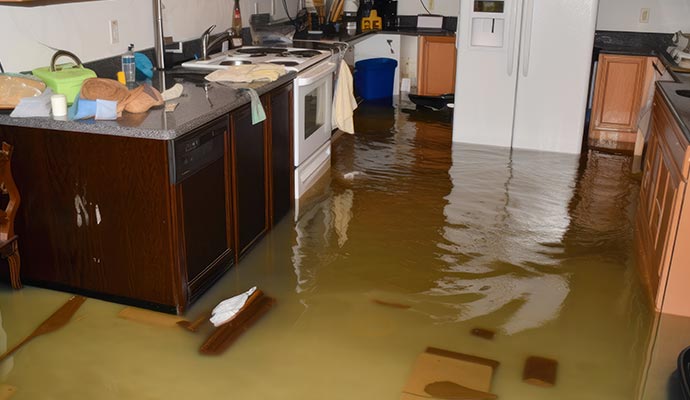
Right after a disaster or incident is the worst possible time to figure out what your insurance actually covers. Unfortunately, that’s sometimes when flood victims ask, “Is flooding covered by home insurance?”
It’s important to know that flood damage isn’t usually included in most standard home insurance policies. Insurance coverage varies widely by carrier, policy type, endorsements, exclusions, limits, and your specific loss circumstances. This article is for general informational purposes only and is not insurance, legal, or claims advice. Always read your policy carefully, review any riders or add-ons, and confirm coverage details directly with your insurance agent or provider before relying on them.*
To help homeowners avoid further devastation after a flood, we’re clarifying what is and isn’t covered in standard policies, how flood insurance works, and what steps you should take if you’re impacted by flooding.
Does Homeowners Insurance Cover Flood Damage?
Standard home insurance does NOT cover flood damage caused by natural disasters. That may leave you wondering, “Is flood damage covered by insurance at all?”
Only if you have the right flood insurance policy.
Unfortunately, many homeowners assume that their policy is more ‘all-encompassing’ when it comes to any type of damage. This mistaken assumption can be reinforced because some water-related events are normally covered. For example, most homeowners would see their insurance coverage kick in if an appliance malfunctioned and leaked considerable amounts of water.
Even more confusing, homeowners and insurance companies sometimes differ on their definition of a ‘flood.’ Homeowners are more likely to consider almost any type or amount of water filling their property’s interior or exterior as a ‘flood.’ However, insurance companies typically specify that ‘flooding’ results from weather incidents (e.g., natural bodies of water overflowing, storm surges, heavy rainfall accumulation).
With that in mind, it’s crucial to determine the source of the water if you experience water damage, as proper documentation and timely water damage restoration can impact both safety and insurance outcomes.
What Homeowners Policies Typically Cover
If an incident results in water damage after something malfunctions (despite receiving proper maintenance), it will typically be covered under a homeowner’s insurance policy. This might include:
- HVAC, plumbing, or other appliances that experience a sudden discharge
- A roof leaking during heavy storms
However, proper maintenance is crucial. Neglect can sometimes give insurance companies a reason to deny claims.
What Homeowners Policies Exclude
Comparatively, homeowners’ policies typically don’t cover flood damage when it’s solely caused by an external incident or disaster. Adding specialized flood coverage is normally required for events like:
- Rising floodwaters that allow water to enter a structure
- Coastal flooding (e.g., storm surges) or overflowing rivers
- Flash floods
- Groundwater slowly seeping through a foundation or structure
Damage caused by slow, long-term leaks or lack of maintenance will likely not be covered by any homeowners insurance policy or supplemental coverage.
What Counts as a “Flood” for Insurance Purposes?
As noted above, the definition of a flood might differ depending on who you ask. For example, the Federal Emergency Management Agency (FEMA) defines a flood as “an excess of water on land that is normally dry.” Generally, insurers follow similar definitions to avoid coverage overlap, and this is seen in the differences between homeowners and flood insurance.
- Homeowners insurance covers sudden water discharges and entries due to malfunctioning or faulty structures, appliances, plumbing, and more. This is because some element of the dwelling’s structure or critical systems and components failed.
- Conversely, flood insurance wouldn’t cover something like a roof leak because it has nothing to do with rising floodwaters.
The National Flood Insurance Program (NFIP) under FEMA is a little more specific about floods regarding insurance policy coverage, defining them as “A general and temporary condition of partial or complete inundation of two or more acres of normally dry land area or of two or more properties.” NFIP’s definition goes on to specify that the flooding must be from one of the following sources:
- Overflow of inland or tidal waters
- Unusual and rapid accumulation (or runoff) of surface waters from any source
- A land collapse or subsidence located near a body of water and caused by erosion
- Mudflows (i.e., a river of liquid and flowing mud on the surface of normally dry land areas)
Understanding Flood Insurance (NFIP & Private Options)
In the US, homeowners will find two types of flood insurance available: NFIP and private options.
The public insurance option—NFIP—determines eligibility based on whether applicants reside in one of the 22,600 NFIP communities that participate in the program’s floodplain management requirements. Through two types of insurance (building coverage and contents coverage), the program insures direct physical losses to both structures and belongings.
If you reside or operate a business within a Special Flood Hazard Area (SFHA) and have a federally backed mortgage, you are typically required to carry flood insurance.
Alternatively, property owners may choose private flood insurance as an alternative to NFIP coverage. Private insurers can offer broader coverage options or higher limits than the public plan, and some lenders may accept or require private flood insurance even outside of high-risk flood zones.
What Flood Insurance Does Cover
If a flood of any kind is the direct source of your physical losses, NFIP’s flood insurance for buildings coverage should include:
- Structural damage done to the foundation, electrical system, and plumbing
- Essential systems, such as HVAC, water heaters, furnaces, and other appliances
- Removal of any damaged structures or materials, like flooring, walls, built-ins, and debris
NFIP’s contents coverage would help replace items like:
- Personal belongings, including clothing, furniture, and personal electronics
- ‘Portable’ appliances, like microwaves and small dishwashers
- Food freezers and their contents
What Flood Insurance Does NOT Cover
Flood insurance doesn’t normally cover temporary housing or Additional Living Expenses (ALE). Additional policy particulars may vary by the insurer. For example, NFIP’s building coverage extends to “permanently installed carpeting over an unfinished floor,” but the program’s contents coverage extends to “carpeting not included in building coverage.”
Similarly, some insurers may differ on whether they cover landscaping and exterior structures (e.g., sheds, decks, pools). So, it’s crucial that you review every detail of your policy with your insurer before signing any contracts.
Common Scenarios and Whether They’re Covered
To further simplify what homeowners and flood insurance policies cover, let’s compare a few scenarios where the protections of one or both would activate.
Storm Surge from a Hurricane
Storm surges represent one type of coastal flooding. They occur when the winds from severe storms (including hurricanes) push more and more water onto the shore until the inclement weather moves past or makes landfall.
Given that storm surges are explicitly a type of flooding, flood insurance would cover any related damages, but homeowners insurance wouldn’t.
Heavy Rain Causing Street Flooding That Enters the Home
Street flooding is usually caused by clogged or insufficient drainage systems, allowing water to accumulate at ground level and on roads. As another type of flooding (and assuming there was no malfunction related to the home), only flood insurance would provide coverage.
Sewer Backup After a Storm
Insurers don’t normally consider a backup like this a proper flood. Unfortunately, homeowners insurance policies often exclude this scenario, too.
Most homeowners must add this protection as additional coverage (and cost).
Water Entering Through a Damaged Roof
A sudden failure or malfunction of a roof during a storm (e.g., wind, hail) that allowed water to enter the structure would be covered by homeowners insurance. Of course, that’s assuming the roof has been properly maintained and not neglected.
Basement Flooding
‘Basement flooding’ is often used as a general term. If the flooding is caused by a burst pipe or another internal system failure, that would be covered by homeowners insurance. If the flooding is caused by groundwater seeping through the foundation, that would be covered by flood insurance.
How to Check if You Need Flood Insurance
The best ways to determine whether you need flood insurance are to research your area and speak with your mortgage provider. As noted above, certain SFHAs make flood insurance mandatory. It’s also worth referencing flood zone maps and local weather history. The bank financing the mortgage on your house might also require flood insurance.
However, it’s important to note that flood frequencies have been rising since 2000, according to the UN Office for Disaster Risk Reduction. Additionally, FEMA reports that “about 25 percent of all flood insurance claims come from areas with low-to-moderate flood risk.”
So, even if flood insurance isn’t required, it’s worth considering.
What to Do After Flood Damage Occurs
After a flooding incident, it’s crucial to immediately start documenting everything you can to prepare for your insurance claim. If possible, include pre- and post-flood photos of anything that should be covered. Preparing inventory and documentation checklists in advance can be extremely helpful.
If the flooding hasn’t fully receded, remember that floodwater is designated as ‘Category 3.’ That’s because you must assume it’s contaminated by building debris, bacteria, human or animal waste, etc. The water may also pose a hazard if exposed wiring or electrical components make contact with it.
So, as important as documentation is, personal safety is paramount.
While it’s helpful to start with simple drying efforts for some belongings or rooms (e.g., dehumidifier, towels) after a flood, you should wait for an expert restoration company’s consultation before any heavy lifting.
Why Professional Restoration Matters
If you’re not experienced with post-flood restoration, you might miss issues that can become more damaging and costly over time. Certified, expert technicians can conduct assessments like moisture mapping and identifying mold growth, structural deterioration, and secondary damage.
Perhaps most importantly, professional restorers will help provide proof for insurance adjusters.
Tips for Protecting Your Home Against Flood Damage
Fortunately, certain preparations, maintenance efforts, and investments can help homeowners protect their property against flood damage. These include:
- Cleaning gutters and downspouts year-round rather than letting them overfill and dump water around the foundation’s perimeter
- Improving grading and drainage around the foundation to prevent water buildup
- Installing sump pumps, backflow valves, and French drains inside and outside
- Sealing basement walls to prevent water ingress
- Elevating utilities well above the levels water might rise to
Flood Troubles? Frontier Services Group has You Covered
So, is flood damage covered by homeowners’ insurance?
Unfortunately, standard homeowners insurance is not, and many people don’t understand the difference between homeowners insurance and flood insurance until it’s too late. That knowledge, combined with proactive risk assessment, could help ensure you receive the compensation you need to rebuild or restore your home.
Remember that homeowners insurance is specific to malfunctions or failures involving the structure itself, whereas flood insurance is specific to natural events and inclement weather that bring flooding to you.
Regardless of which insurance policy relates to your challenges, the certified, expert technicians at Frontier Services Group have you covered. Reach out at any time—24/7—to discuss inspections, moisture checks, or emergency flood cleanup.
Sources:
- FEMA. Flood Insurance. https://www.fema.gov/flood-insurance
- Floodsmart. Floodsmart. https://www.floodsmart.gov/
- Floodsmart. NFIP Summary of Coverage. https://agents.floodsmart.gov/sites/default/files/media/document/2025-07/fema-nfip-summary-coverage-brochure-12-2023.pdf
- Floodsmart. Who’s Eligible for NFIP flood insurance. https://www.floodsmart.gov/get-insured/eligibility
- NREIG. What’s the Difference Between Flood, Water Damage & Sewer Back-up Coverage? https://nreig.com/know-difference-flood-water-damage-sewer-back-2/
- UN Disaster Risk Reduction. GAR 2025 Hazards: Floods. https://www.undrr.org/gar/gar2025/hazard-exploration/floods
- FEMA. Low Risk Flood Zones? https://www.fema.gov/faq/low-risk-flood-zones